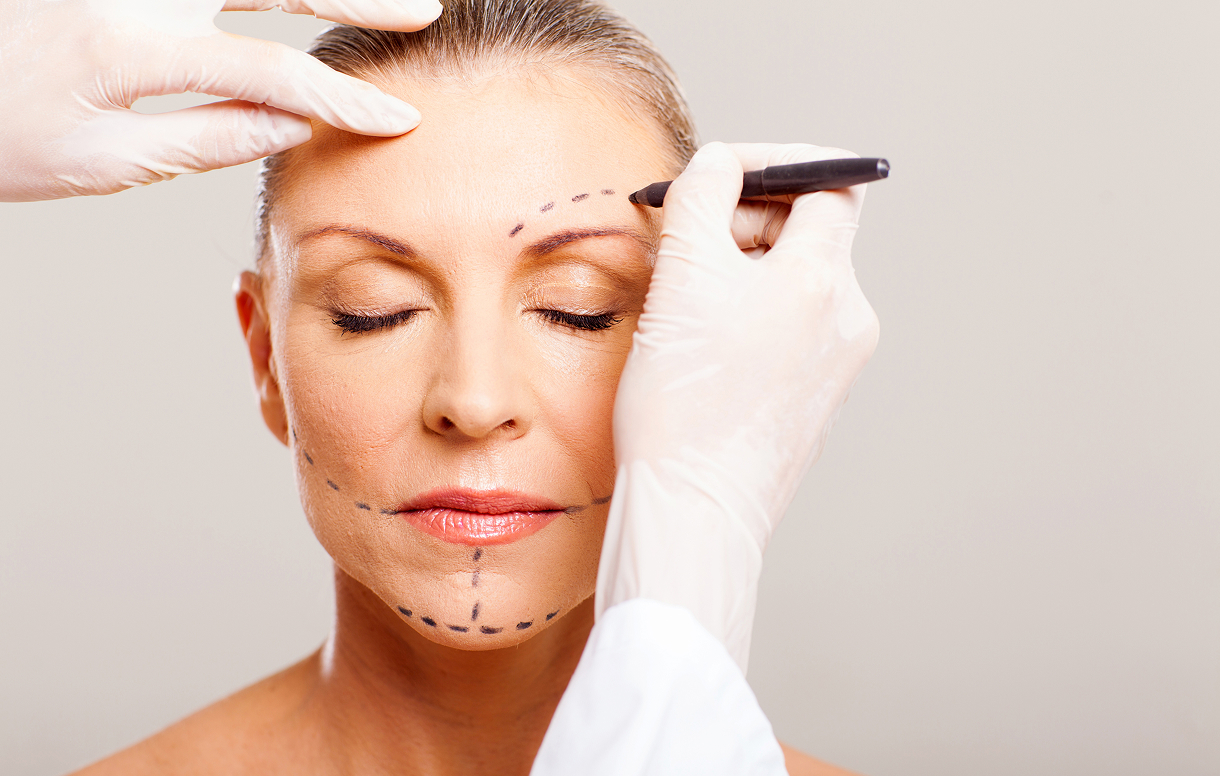

Does a Facelift Last Forever?
No procedure does. Skin and deeper tissue continue to respond to gravity, sun exposure, and the ordinary passage of time after a facelift the same way they did before it. What changes is where you start. A patient who has a facelift at 55 that removes about a decade of visible aging will look close to 45. Ten years later, at 65, she’ll look roughly the age she would have looked at 55 without surgery. The correction holds. The clock still runs.
Why Technique Determines How Long Results Last
The single biggest factor in facelift longevity is what the surgeon lifts.
Older horizontal-pull techniques worked on skin alone, stretching it tighter and stitching it back down. That approach produces a tight, windblown appearance, and it fades fast because skin has limited tensile strength. It stretches back out, often within a couple of years.
Dr. Waleed Ezzat‘s approach works underneath the skin, at the SMAS (superficial musculoaponeurotic system), the muscular layer that holds facial structure in place. Repositioning that deeper layer, rather than pulling surface skin, redistributes the support your face relies on. Because muscle and connective tissue hold tension far better than skin does, SMAS-based correction is why our facelift patients see results that read as natural years later rather than “done.”
For patients with more advanced volume loss or laxity through the midface, a deep plane approach, which releases the retaining ligaments beneath the SMAS layer, can extend that same durability further. The deep plane facelift results duration tends to fall at the longer end of the seven- to 12-year range. Which approach fits your face is a conversation we have during your consultation.
What Determines Your Number Within That Range
Two patients can undergo the same procedure and end up in different places within that seven- to 12-year window. The variables that move the needle include:
- Age at surgery. Skin retains more elasticity and collagen at 45 than at 65, and starting with better tissue quality generally means a longer runway before the effects of aging catch up.
- Skin quality and sun history. Years of unprotected sun exposure break down collagen faster, which shortens how long any surgical correction looks fresh.
- Genetics and skin type. Some patients simply retain structural results longer than others, regardless of what they do.
- Lifestyle. Smoking, significant weight fluctuation, and chronic sun exposure all work against the correction a facelift provides.
- Surgical technique. Nothing you do afterward compensates for a skin-only lift.
Facelift Maintenance That Extends Your Results
This is where nonsurgical treatment becomes useful, not as a replacement for surgery, but as upkeep on the investment you already made. A facelift addresses structure and sagging; it does not stop new fine lines, sun damage, or gradual volume loss from developing on top of that corrected foundation.
We build maintenance plans around a handful of tools:
- Botox and Dysport to soften new dynamic lines around the eyes and forehead as they appear
- Dermal fillers to replace the volume the face loses gradually in the years after surgery
- Morpheus8, which uses radiofrequency and microneedling to keep collagen production active in the skin overlying your surgical result
- FaceTite for patients who develop mild new laxity years out and want tightening without a second surgery
Patients who remain consistent with a maintenance schedule and reasonable sun protection tend to land at the higher end of the seven- to 12-year range. Patients who do nothing at all still maintain their structural correction, but new signs of aging accumulate more quickly.
Facelift Options and Their Durability
Not every lift is scoped the same, and the difference comes down to how much tissue each procedure addresses. A mini facelift or limited-incision lift targets a smaller area, usually the jowls and lower face. It typically lasts three to five years because less structural tissue is repositioned. A full facelift addresses the midface and lower face together and lasts longer as a result. A neck lift, often paired with a facelift, tightens the platysma muscle across the front and sides of the neck and redrapes neck skin. This correction typically lasts 10 to 15 years when the neck lift is combined with a structural facelift.
Every consultation starts with your own goals and an accurate read of what a facelift can realistically hold for you. Dr. Ezzat walks through your anatomy and the technique best suited to keep results looking natural years down the road. There’s no cost or obligation to find out where you’d land in that range.